
The framework
Systemic Infrastructure for Multilingual Success
A research-based framework for evaluating the structural conditions that determine whether multilingual learners thrive or fall behind — regardless of individual teacher quality.
Picture a bucket
Think of your school's support system for English learners as a bucket. The five SIMS domains are five equidistant points along the base — each one bearing equal weight. The water represents student outcomes: access to instruction, language development, and academic progress. When all five domains are solid, the system holds. When even one is weak, the whole structure tilts and outcomes leak out at that point. When multiple domains fail, the bottom falls out entirely.
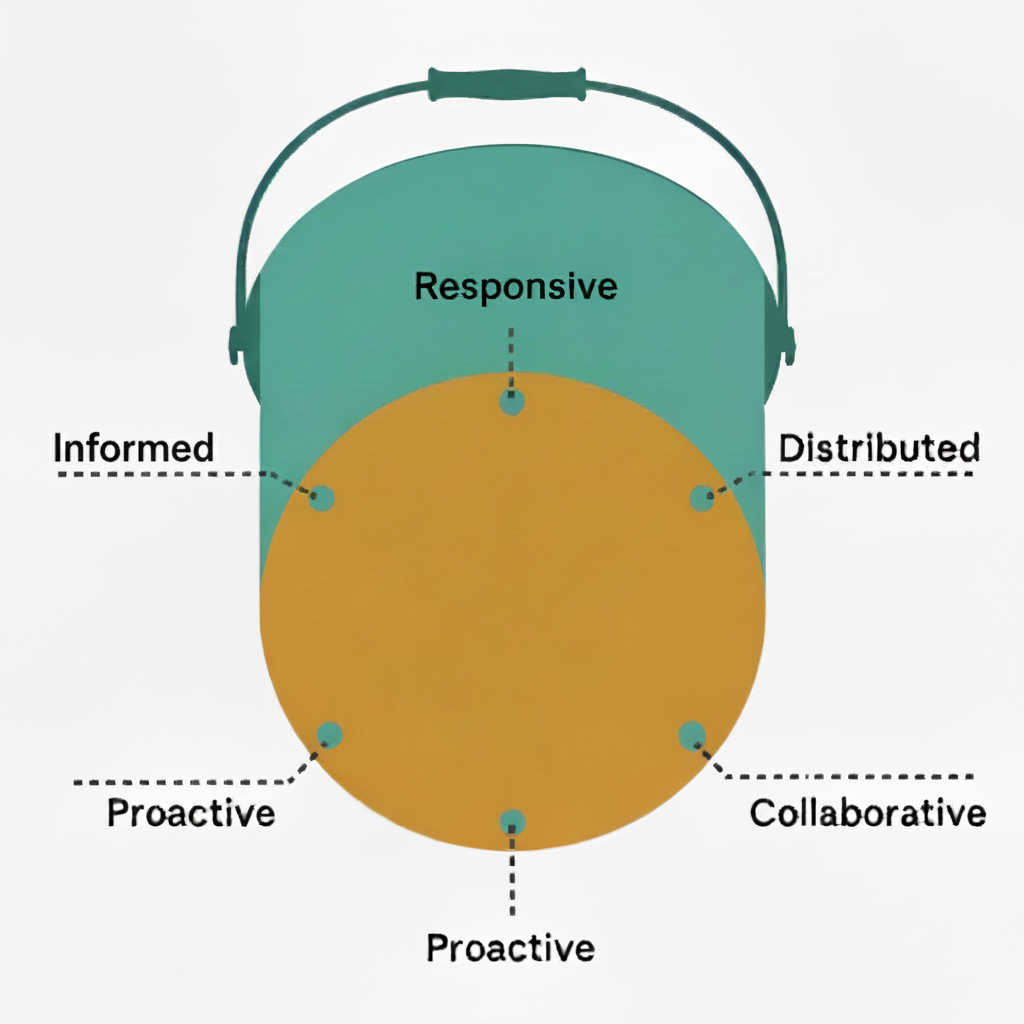
A well-supported system
All five domains are functioning. The system holds and student outcomes — access, language development, academic progress — are fully supported.
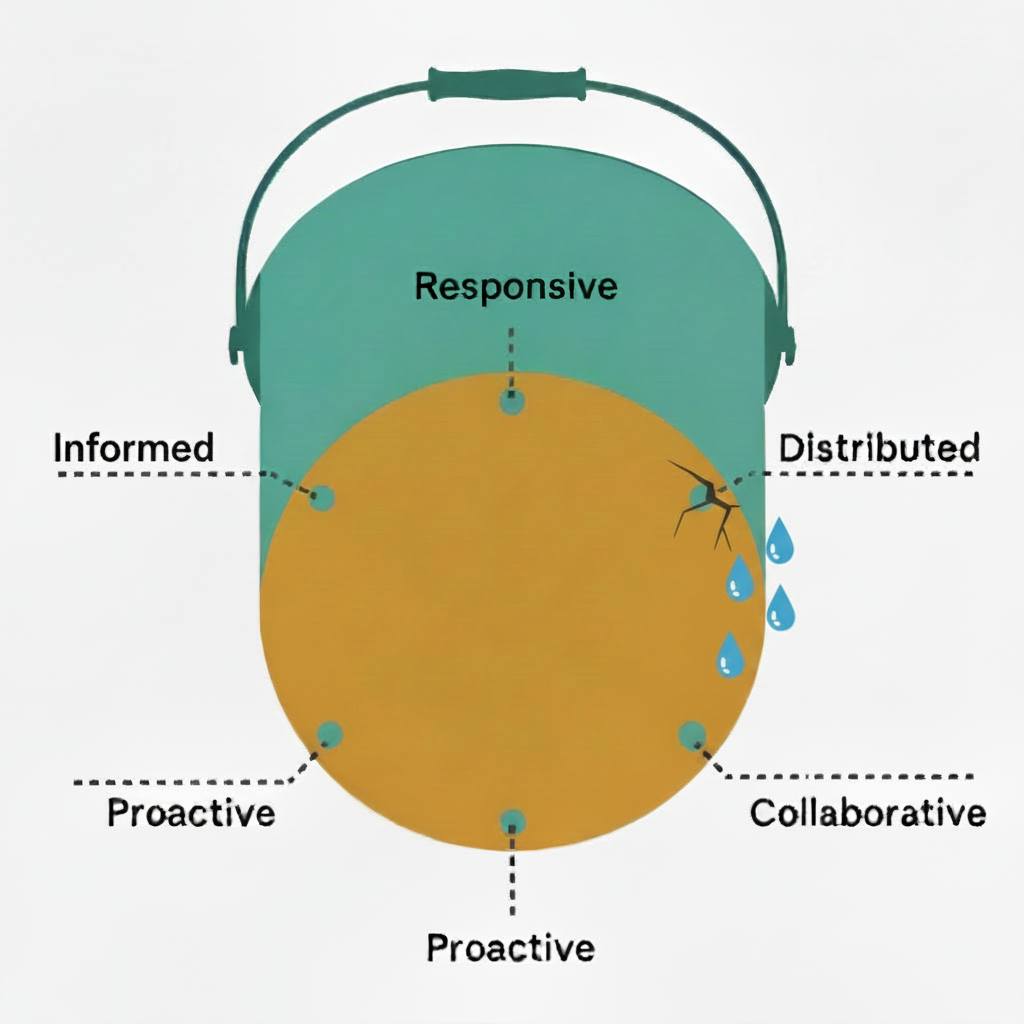
One weak point changes everything
When one domain is underdeveloped, the system tilts. Student outcomes leak at exactly that point — regardless of how strong the other four are.
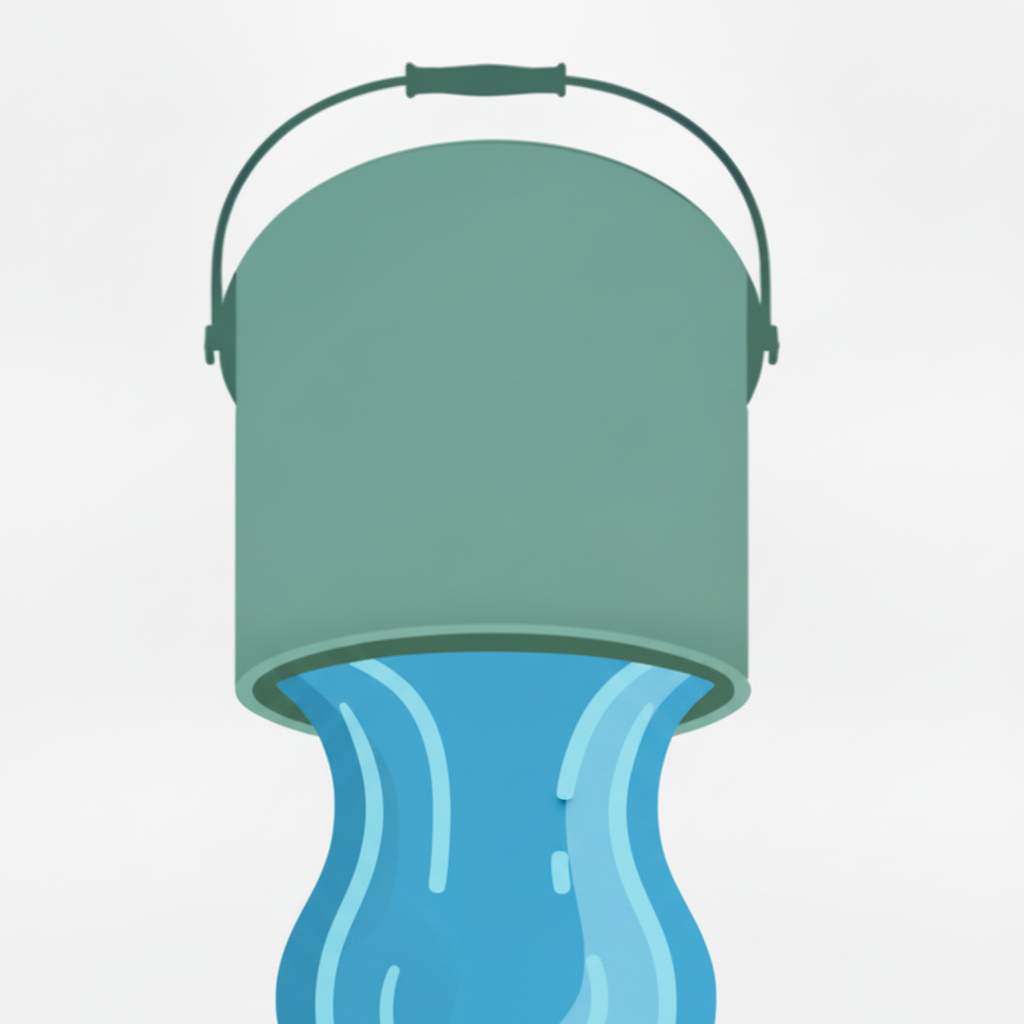
The bottom falls out
When multiple domains fail, the structure can no longer hold. Student outcomes — access, language development, academic progress — drain away entirely, no matter how much effort is poured in at the top.
The five domains
Informed

Staff across the building have accurate, current knowledge about multilingual learners and what the research says about effective practice.
Staff across the building have accurate, current knowledge about multilingual learners — who they are, what they need, and what the research says about effective practice.
What this looks like
- Teachers receive ongoing, relevant professional development on language acquisition and multilingual learner needs
- Staff can distinguish between language development and learning disabilities
- Knowledge about individual students is shared across roles, not siloed in the ESL room
Proactive
The school anticipates the needs of multilingual learners rather than reacting after problems arise.
The school anticipates the needs of multilingual learners rather than reacting after problems arise. Systems are in place before students arrive, not built in response to crisis.
What this looks like
- Enrollment and intake processes are ready for mid-year arrivals
- ESL services are protected from pull-out conflicts and scheduling gaps
- Families of multilingual learners have access to support staff who speak their language
Collaborative
ESL teachers and classroom teachers work together in structured, supported ways built into the schedule.
ESL teachers and classroom teachers work together in structured, supported ways. Collaboration is built into the schedule, not left to individual initiative.
What this looks like
- ESL and classroom teachers have dedicated time to co-plan and co-teach
- ESL teacher recommendations are implemented, not ignored
- Staff are notified when a multilingual learner joins their class
Distributed
Responsibility for multilingual learners is shared across the building — no single teacher carries the full weight.
Responsibility for multilingual learners is shared across the building. No single teacher or role carries the full weight of supporting this population.
What this looks like
- Staff know who to go to with questions about multilingual learners
- ESL expertise is included in school-wide decisions that affect multilingual learners
- Teachers can raise concerns about multilingual learners without fear of pushback
Responsive
The school monitors how multilingual learners are doing and adjusts when something isn't working.
The school monitors how multilingual learners are doing and adjusts when something isn't working. Systems exist to catch problems early and act on what the data shows.
What this looks like
- Student progress in language development is reviewed regularly
- Concerns about individual multilingual learners are reviewed and followed up on
- Changes to practice are driven by evidence, not assumption
Where SIMS comes from
SIMS grew out of a tri-state research project conducted during the COVID-19 pandemic. Dr. Michelle Benegas was a member of a research team that collected survey and interview data from ESL and bilingual teachers across three states to examine two questions: What roles and responsibilities were ESL and bilingual teachers expected to take on — and actually taking on — during emergency remote teaching? And how were language teachers positioning themselves within their schools as they navigated those expectations?
Those original questions produced three foundational analyses. A survey analysis documented the roles and responsibilities ESL teachers assumed during emergency remote teaching and learning, published in Indiana TESOL Journal and Planning and Changing. A combined survey and interview analysis examined how language teachers positioned themselves — assuming, negotiating, and resisting expectations placed on them — published in TESOL Quarterly.
Building on the foundation those three articles established, Dr. Benegas conceived of SIMS by returning to the data to examine a different question: what school-level infrastructure allowed instruction for multilingual learners to continue without interruption? The answer pointed less to individual teachers' effort than to the systems around them — how information flowed, how decisions were made, how roles were defined, and how schools responded when something wasn't working. Those conditions became the five SIMS domains: Informed, Proactive, Collaborative, Distributed, and Responsive. The framework was presented at conference and published in the MinneTESOL Journal in 2021.
Source articles
- Benegas, M., Morita-Mullaney, T., Cushing-Leubner, J., Stolpestad, A. O., & Greene, M. C. S. (2021). Systemic infrastructure for multilingual success: ESL teacher responses to emergency remote teaching and learning at the onset of the COVID-19 pandemic. MinneTESOL Journal, 37(2), 1–13.
- Morita-Mullaney, T., Greene, M. C. S., Cushing-Leubner, J., Stolpestad, A., & Benegas, M. (2021). COVID-19 and pandemic teaching: Emergency remote teaching and learning (ERTL) and English learner teachers. Indiana TESOL Journal, 18(1), 25–39.
- Cushing-Leubner, J., Morita-Mullaney, T., Greene, M. C. S., Stolpestad, A., & Benegas, M. (2021). The (im)possibilities of equitable education of multilingual emergent bilinguals in remote teaching: A survey of English language teachers in the Great Lakes region. Planning and Changing, 50(3/4), 139–164.
- Morita-Mullaney, T., Cushing-Leubner, J., Benegas, M., Greene, M. C. S., & Stolpestad, A. (2023). Clashing roles and identities of EL teachers during emergency remote teaching and learning. TESOL Quarterly, 57(2).
Grounded in research
SIMS grew out of a study of ESL teachers across three states during emergency remote teaching. A closer look at that data identified five conditions that allowed instruction for multilingual learners to continue without interruption: Informed, Proactive, Collaborative, Distributed, and Responsive. The framework was published in the MinneTESOL Journal in 2021.
Validation in progress
We're building the evidence that the SIMS survey measures what it's designed to measure. That work includes:
- Expert review: A panel of specialists in multilingual education and measurement is rating each item for relevance to its domain.
- Pilot testing: Partner districts are completing the survey to test how it works in real schools.
- Reliability and structure: Retesting and factor analysis will show whether the survey measures each domain consistently and whether the five-domain structure holds.
Early adopters help shape the research. Districts that participate in pilot testing contribute to the validity and reliability studies that will strengthen the instrument for everyone.
Ready to see where your building stands?
Take the free SIMS Snapshot — 15 questions, immediate results, no account required.
Want building-level data or expert interpretation? Contact us